Last Updated: June 2026
Written by: UV DTF Production Specialist
Reviewed by: DTF Gang Roll Production Team
Quick Answer
3D UV DTF printing is a hard surface decal method that produces raised, full-color transfers for cups, bottles, jars, tumblers, acrylic signs, packaging, phone cases, and product displays. The raised texture comes from layered ink, varnish, and controlled UV curing, giving logos and product labels a dimensional feel you can see and touch.
It is not the same as regular DTF, which is made for fabric. 3D UV DTF is built for hard goods and applies with pressure, no heat press required.
For businesses in Arlington, Dallas, Fort Worth, Grand Prairie, Mansfield, Irving, and across the DFW area: if you need branded product decals with a premium tactile finish for a local event, product launch, or retail shelf, this guide covers everything you need to know before placing your order.
What Is 3D UV DTF Printing?
3D UV DTF printing creates a full-color decal on transfer film, then applies it to a hard surface using pressure. Breaking down the name:
UV means the ink is cured with ultraviolet light during production, which sets the color layers quickly and precisely.
DTF means direct to film, the design is printed directly onto a transfer film rather than onto the product surface itself.
3D means the finished decal has a raised, dimensional texture that you can feel with your fingertip, not just a flat printed image.
The result is a hard surface sticker with full-color artwork, clean edges, and a tactile raised finish that makes logos and product labels look and feel more premium than standard flat vinyl or paper labels.
How the Raised Effect Works in 3D UV DTF Printing
The raised texture in 3D UV DTF printing comes from a controlled layering process during production. Here is what actually happens:
White ink base layer is laid down first to provide opacity and a foundation for color accuracy on any surface color.
Color layers are built on top of the white base using UV-cured inks across the full design.
Varnish layers are applied over the color to build physical height, the more varnish passes, the more pronounced the raised texture becomes.
UV curing between layers locks each pass in place, creating a stable dimensional structure rather than a wet pooled layer that would spread and lose definition.
The combination of these layers produces a decal that sits above the surface, catches light differently than a flat print, and gives a noticeable tactile response when touched. For premium product branding, that physical detail signals quality to a customer the moment they pick up the product.
When the Raised Effect Works Best
Raised UV DTF printing performs strongest when the design has clear edges, enough size for the texture to be visible, and a smooth application surface:
- Logos: raised brand marks on cups, bottles, and packaging
- Name decals: personalised tumblers, gift items, and event products
- Product labels: candle jars, cosmetic bottles, and retail packaging
- Acrylic signs: counter displays, shelf markers, and boutique signage
- Cup decals: cold cup logos and drinkware branding for coffee shops and events
- Packaging marks: gift box seals and boutique packaging accents
When to Be Cautious
Very small text, ultra-thin lines, and micro-detail artwork benefit less from the raised effect. If the design element is smaller than 6mm, the texture may not be clearly noticeable and could make fine details harder to read. For these cases, a flat UV DTF print is often a cleaner result. When in doubt, test one decal at your intended size before committing to a full run.
What Is TPU UV DTF Printing?
TPU stands for thermoplastic polyurethane, a material known for its balance of flexibility, toughness, and abrasion resistance. It is widely used in phone cases, protective films, and flexible packaging because it can bend without cracking and resist everyday wear without degrading.
In UV DTF production, TPU film or TPU-based adhesive layers can be incorporated into the transfer system to create a more flexible decal structure compared to a fully rigid UV-cured setup.
What TPU Actually Changes for Buyers
|
Property |
Standard UV DTF |
TPU UV DTF |
|
Flexibility |
Rigid |
More flexible |
|
Surface conformity |
Best on flat surfaces |
Handles slight curves better |
|
Abrasion resistance |
Good |
Stronger |
|
Best for |
Flat signs, jars, packaging |
Bottles, tumblers, curved items |
|
Application |
Pressure |
Pressure |
|
Heat press needed |
No |
No |
For a buyer ordering cup decals, bottle stickers, or any product with a cylindrical or slightly curved surface, TPU-based UV DTF transfers can reduce the edge-lifting and cracking that sometimes occurs when a fully rigid decal is applied to a curved form.
Important: TPU does not make every surface work. Silicone, rubber, heavily textured surfaces, oily plastics, and sharp curves can still cause adhesion failure regardless of the film type. The surface must still be clean, dry, smooth, and hard. TPU increases the range of products that work, it does not eliminate the need for surface testing.
3D UV DTF TPU Printing vs Regular UV DTF: Which Do You Need?
|
Feature |
Regular UV DTF |
3D UV DTF |
TPU UV DTF |
|
Surface type |
Hard goods |
Hard goods |
Hard goods, slight curves |
|
Texture |
Flat |
Raised |
Flat or raised |
|
Flexibility |
Rigid |
Rigid |
Flexible |
|
Best products |
Flat signs, jars, packaging |
Logos, labels, premium decals |
Bottles, tumblers, curved items |
|
For fabric |
❌ No |
❌ No |
❌ No |
|
Heat press needed |
❌ No |
❌ No |
❌ No |
The decision is straightforward in most cases. If you need a flat decal on a flat surface, regular UV DTF is sufficient. If you want a premium raised texture on a logo or label, 3D UV DTF is the upgrade. If your product has a curved surface, a tumbler, a bottle, a cylindrical jar, TPU UV DTF gives the transfer the flexibility to conform without cracking at the edges.
For apparel, always use regular DTF with heat pressing. UV DTF of any type is not designed for fabric.
Benefits of 3D UV DTF Printing for Small Businesses
The practical value of 3D UV DTF printing for small businesses comes down to three things: better product presentation, smaller order minimums, and no equipment investment.
Better Product Presentation
A raised full-color decal changes how a product feels in a customer's hand. A candle jar with a dimensional logo label does not look homemade, it looks like a product from a boutique shelf. A coffee cup with a raised brand mark photographs better, looks better on a table, and communicates that the business takes its brand seriously. That visual and tactile signal affects buying decisions before a word is read.
Smaller Order Minimums
Factory-printed packaging, embossed labels, and custom printed containers require large minimum order quantities, often 500 to 5,000 units, and long lead times. 3D UV DTF transfers can be ordered in batches of 25, 50, or 100, which means a small business can:
- Test a new product label before committing to large packaging inventory
- Run seasonal or limited edition designs without overbuying
- Brand multiple product lines with different designs on a single sheet
- Update branding when the logo changes without discarding thousands of printed containers
No Equipment Investment
A UV printer, UV inks, transfer film, RIP software, curing unit, and cleaning supplies represent a significant capital investment. For most small businesses, that investment only makes sense after demand is proven. Ordering 3D UV DTF transfers from a supplier lets you test, sell, and scale, and consider equipment only when the volume justifies it.
Advantages of TPU UV DTF Printing Specifically
Beyond the general benefits above, TPU UV DTF has specific advantages for product sellers working with curved or handled items:
Conformity on curves: TPU film flexes slightly during application, allowing the decal to follow a gentle curve without developing air bubbles or cracking at the edges.
Abrasion resistance: TPU materials resist scratching and surface wear better than rigid alternatives, which matters for daily-use items like water bottles, gym shakers, and travel tumblers.
Edge retention: The flexibility of TPU reduces the stress at decal edges during normal product handling, which is where rigid decals most commonly begin to lift.
Short and long run versatility: TPU transfers work for test batches and bulk orders alike, making them a practical choice from the first sample through a full production run.
Best Surfaces for 3D UV DTF Printing
Surface selection is the single biggest factor in how well a 3D UV DTF decal performs. Here is the complete reference guide:
|
Surface |
3D UV DTF Performance |
Notes |
|
Clean glass |
✅ Excellent |
Best overall, smooth, non-porous, easy to prep |
|
Acrylic |
✅ Excellent |
Ideal for signs, tags, display pieces |
|
Glazed ceramic |
✅ Strong |
Mugs, jars, display items, hand wash recommended |
|
Coated metal |
✅ Strong |
Smooth and oil-free surface required |
|
Stainless steel (smooth) |
✅ Good |
Clean thoroughly, oils from hands affect adhesion |
|
Smooth rigid plastic |
✅ Good |
Test first, plastic composition varies widely |
|
Finished / sealed wood |
⚠️ Test first |
Works on sealed surfaces, unreliable on raw wood |
|
Powder-coated metal |
⚠️ Test first |
Some coatings hold well, others release over time |
|
Flexible plastic |
⚠️ Caution |
Use TPU UV DTF version for better edge retention |
|
Rubber or silicone |
❌ Not recommended |
Adhesive does not bond reliably |
|
Fabric or apparel |
❌ Wrong product |
Use regular DTF transfers with heat press |
The practical rule: clean, smooth, dry, and hard. Any surface that is flexible, oily, rough, porous, or coated with a release agent will cause adhesion problems regardless of print quality.
3D UV DTF for Local DFW Businesses: Real Use Cases
For buyers in Arlington, Dallas, Fort Worth, and the wider DFW area, 3D UV DTF transfers solve a specific and recurring local business problem: you need branded products that look finished and professional, but the order is too small for factory minimums and the deadline is too close for long lead times.
Coffee shops near Downtown Arlington and Cooper Street use raised cup decals for cold drinks, seasonal beverages, and weekend event branding. A raised logo on a cold cup photographs better on Instagram than a flat label, and for a local coffee shop, that social media presence is part of the marketing budget.
Food trucks near AT&T Stadium and Globe Life Field need branded cups and packaging before game day weekends. The window between ordering and needing finished products on the truck is tight. Order early enough to test one cup before the full batch is applied.
Boutiques near Parks Mall and the Arlington Entertainment District use raised logo seals on gift boxes, tissue paper inserts, and product packaging to create a branded unboxing experience without ordering custom printed boxes at large minimums.
Candle makers selling at DFW weekend markets and Fort Worth Stockyards shops use short-run jar labels and lid decals to test new scents and seasonal collections. A raised label on a candle jar signals handcrafted quality to a buyer browsing a market table.
Salons in Mansfield, Grand Prairie, and Irving use 3D UV DTF decals on retail product bottles, shampoos, conditioners, treatments, and serums, to add the salon's brand to professional-grade products before putting them on the retail shelf.
Student organizations near The University of Texas at Arlington use raised sponsor decals for fundraiser bottles, event giveaways, and welcome boxes where the premium feel adds perceived value to the item without significantly increasing cost.
Print shops across DFW use 3D UV DTF as a hard surface add-on service for customers who already order apparel transfers, allowing them to fulfil complete branding packages including both fabric and hard goods from a single supplier relationship.
File Setup: What You Must Confirm Before Uploading
3D UV DTF printing amplifies what is in the file, both the good and the bad. A sharp, well-prepared design prints with strong color and clean raised edges. A blurry, low-resolution, or incorrectly formatted file produces a decal that reflects that quality at the finished product level.
|
File Checkpoint |
What to Confirm |
|
Resolution |
300 DPI minimum at the final print size |
|
Background |
Transparent (PNG or vector), no white fill behind logos |
|
Source |
Vector (AI, EPS, SVG) or high-res raster, never a screenshot |
|
Size |
Measured against the actual product surface before uploading |
|
Text |
Readable at the final decal size, test at 100% on screen |
|
Thin lines |
Minimum 1pt stroke, thinner lines may not hold the raised effect |
|
Spacing |
Enough room between designs for clean cutting |
|
Colors |
Customer-approved before submission |
|
Spelling |
Proofread before uploading, reprints for typos are not covered |
|
Raised areas |
Confirmed which elements should carry the 3D effect |
The most common file mistakes that cause reprints and wasted orders:
A logo with a white fill behind it that should have been transparent. An artwork file pulled from a social media profile at 72 DPI. A design sized for a large tumbler that was not re-measured for a narrower bottle. Small text at 5 or 6pt that becomes unreadable at the final decal size.
How to Apply 3D UV DTF Transfers: Step-by-Step
Correct application is what separates a decal that lasts from one that peels within a week. Follow these steps every time:
Step 1: Clean the surface thoroughly. Remove all dust, oil, fingerprints, moisture, and soap residue. Use a lint-free cloth with isopropyl alcohol on glass and smooth plastic. Let the surface dry completely. Do not touch the application area after cleaning.
Step 2: Cut the decal from the sheet. Cut close to the design edge but leave a small border. Do not cut into the artwork. Clean cuts prevent ragged edges that can catch and lift.
Step 3: Peel the backing film carefully. Hold the decal by its edges. Do not touch the adhesive side, skin oils reduce adhesion before the decal is even placed.
Step 4: Position the design. For curved surfaces like tumblers and bottles, start from one edge and work slowly across to avoid trapping air. For flat surfaces like packaging and signs, position from the center outward.
Step 5: Apply firm, even pressure across the entire design. Use a squeegee, credit card, or soft cloth-wrapped fingernail. Press every part of the design, center, edges, corners, and any raised areas. Do not press only the middle and assume the edges will follow.
Step 6: Press every edge firmly. Edges are the most common point of early lifting. Run your fingernail firmly along every edge and corner before removing the carrier film.
Step 7: Peel the carrier film slowly at a low angle. Take your time. Peel at less than 45 degrees. If any part of the design begins to lift with the carrier film, lay it back down, press firmly, and continue more slowly.
Step 8: Allow the item to rest before use. Give the decal at least one hour to bond before handling heavily, washing, or putting the item into service.
Drinkware care: hand washes only. Do not soak. Do not scrub the decal edge. Do not microwave. Avoid abrasive sponges and strong detergents.
3D UV DTF Printing Services: What to Look For in a Supplier
Not all 3D UV DTF printing services are the same. Before committing to a supplier, confirm these points:
|
Supplier Checkpoint |
What to Ask |
|
Surface guidance |
Do they explain which surfaces work and which to test? |
|
File support |
Do they offer file review or feedback before printing? |
|
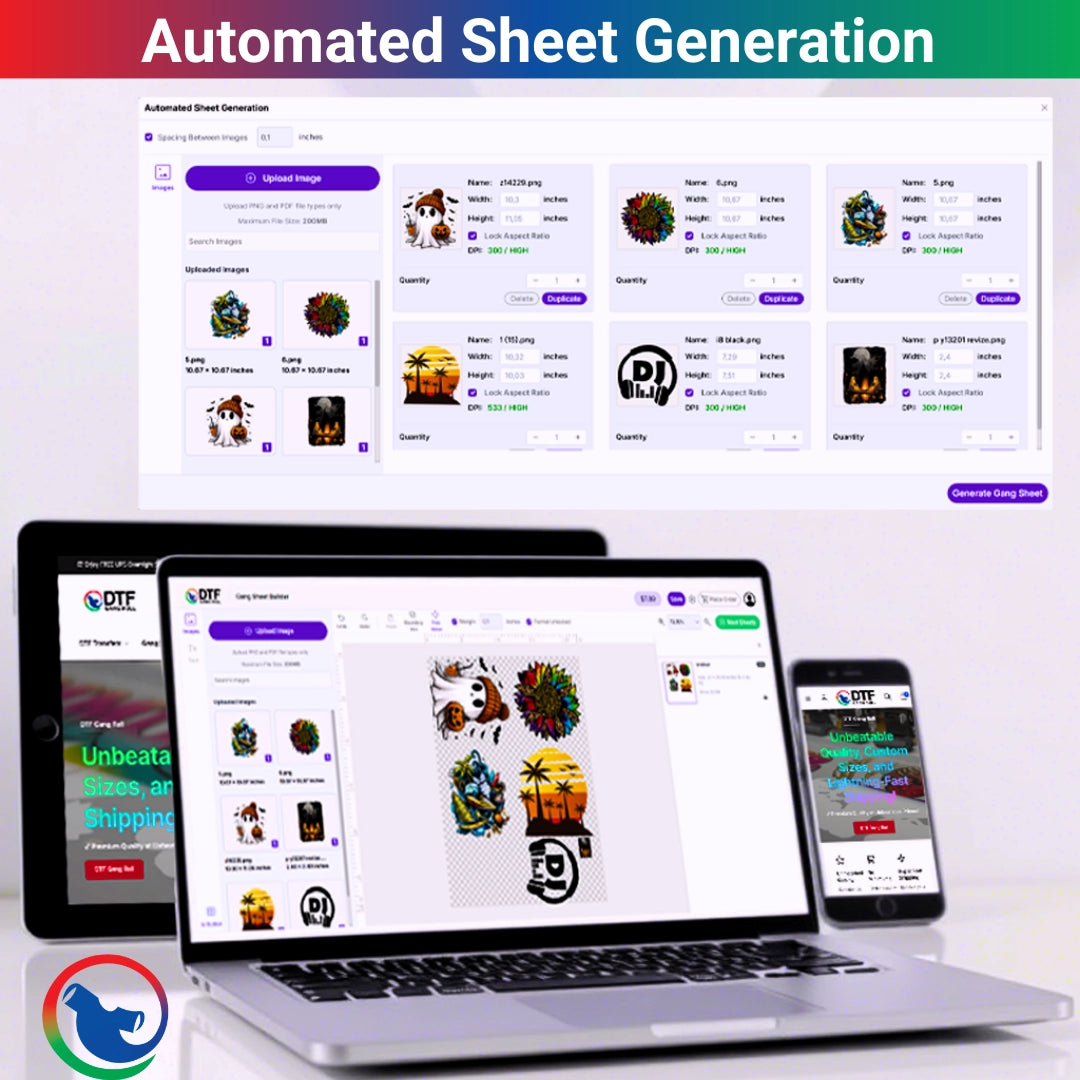
Gang sheet options |
Can you combine multiple designs on one sheet? |
|
Raised effect options |
Do they distinguish between flat and 3D UV DTF? |
|
TPU option availability |
Is TPU UV DTF available for curved products? |
|
Care instructions |
Do they provide drinkware care guidance with orders? |
|
Order minimums |
Can you start with a small test batch? |
|
Turnaround time |
Is the timeline clear before the order is placed? |
|
Local pickup |
Is DFW local pickup available for urgent orders? |
|
Reorder support |
Do they save your layout for repeat orders? |
A supplier that answers yes to all of these is set up to help you succeed with the product, not just process the transaction.
At DTF Gang Roll, we serve local DFW businesses and online sellers with both UV DTF hard surface transfers and regular DTF apparel transfers from one location. That means you can order cup decals and staff shirt transfers in the same order, with one file review, one turnaround timeline, and one point of contact.
Final Takeaway
3D UV DTF printing gives small businesses, local vendors, print shops, and product brands a practical path to raised, full-color product decals, without buying a UV printer, meeting factory minimums, or committing to large packaging runs before demand is proven.
For Arlington and DFW buyers: choose the right surface, prepare a clean high-resolution file, apply one test decal before ordering in volume, and order early enough to confirm the result before your event or product launch.
Whether you are a coffee shop near Downtown Arlington branding cold cups for a weekend rush, a candle maker labeling seasonal jars for a Fort Worth market, a boutique near Parks Mall sealing gift boxes for a holiday launch, or a food truck near AT&T Stadium preparing branded packaging for game day, 3D UV DTF transfers deliver the branded product look your business needs without the overhead that makes large packaging runs impractical at small scale.
FAQs
What is 3D UV DTF printing?
It is a hard surface transfer method that produces raised, full-color decals using layered UV-cured ink and varnish. The result is a dimensional decal you can see and feel, applied to hard goods like cups, bottles, jars, packaging, and signs with pressure, no heat press needed.
What is 3D UV DTF TPU printing?
It is a UV DTF transfer method that incorporates TPU (thermoplastic polyurethane) film or adhesive layers to create a more flexible decal structure. It is useful for products with slight curves, like tumblers and bottles, where a fully rigid decal may crack or lift at the edges.
Is TPU UV DTF printing good for curved products?
It can improve performance on slight curves compared to standard rigid UV DTF. However, the exact product must still be tested, steep curves, rough surfaces, silicone, and rubber can still cause adhesion problems.
What are 3D UV DTF transfers used for?
Hard surface branding on cups, tumblers, water bottles, jars, bottles, acrylic signs, phone cases, cosmetic containers, candle jars, product boxes, gift packaging, retail displays, and promotional products.
Are 3D UV DTF stickers waterproof?
They are water-resistant under normal use when applied correctly. Hand washing is recommended for drinkware. Dishwashers, soaking, abrasive cleaning, and microwaving will shorten the life of any adhesive-based decal.
Can I use 3D UV DTF on shirts?
No. UV DTF of any type is for hard surfaces only. For shirts, hoodies, tote bags, and fabric, use regular DTF transfers with heat pressing.
What are the main benefits of 3D UV DTF printing?
Raised texture, full-color output, short-run capability, no heat press required, no equipment investment needed, and premium product presentation for cups, bottles, jars, packaging, and signs.
What surfaces work best for 3D UV DTF?
Clean glass, acrylic, glazed ceramic, coated metal, and smooth rigid plastic are the strongest choices. Test finished wood, powder-coated metal, and flexible plastic before ordering in volume. Avoid rubber and silicone entirely.
Should I test before ordering in bulk?
Always. Apply one transfer to your exact product, use it normally, confirm size and placement, and check edge adhesion before committing to a full run.
What file should I upload?
A 300 DPI minimum resolution file with a transparent background where needed. Vector files (AI, EPS, SVG) are preferred. Never use screenshots, stretched logos, or files pulled from social media profiles.